
by Emily Cowan
Transitioning from classroom teacher to instructional coach brought a wave of uncertainty. Beyond wondering if I was truly qualified or how colleagues would view me in this new capacity, my biggest apprehension was the responsibility of designing professional development.
Throughout my six years in the classroom, I experienced far too many professional development sessions where the core purpose felt unclear. We were expected to seamlessly integrate new concepts into our instruction without being given the necessary time to digest the material, build resources, or receive ongoing implementation support.
I was determined not to repeat those mistakes. I refused to lead sessions where teachers felt ignored or overwhelmed by competing priorities on their to-do lists. Instead, my goal was to cultivate learning spaces grounded in empathy—where educators feel understood, are given deliberate time for processing, and receive continuous support beyond the initial session. Realizing this vision requires us to move past traditional instructional approaches and embrace the true art of adult learning.
Shifting from Contractor to Architect
When we step into instructional coaching, our natural instinct is to act like a general contractor. We feel immense pressure to bring the finished materials, hand over the exact instructions, and tell teachers how to build their lessons.
It comes from a good place—we want to save teachers time and relieve their stress. But when we supply all the answers, we accidentally recreate that passive, "sit-and-get" environment we set out to avoid.
To honor adult learners, and all of the knowledge and experience they come to us with, we have to shift our identity from contractor to architect.
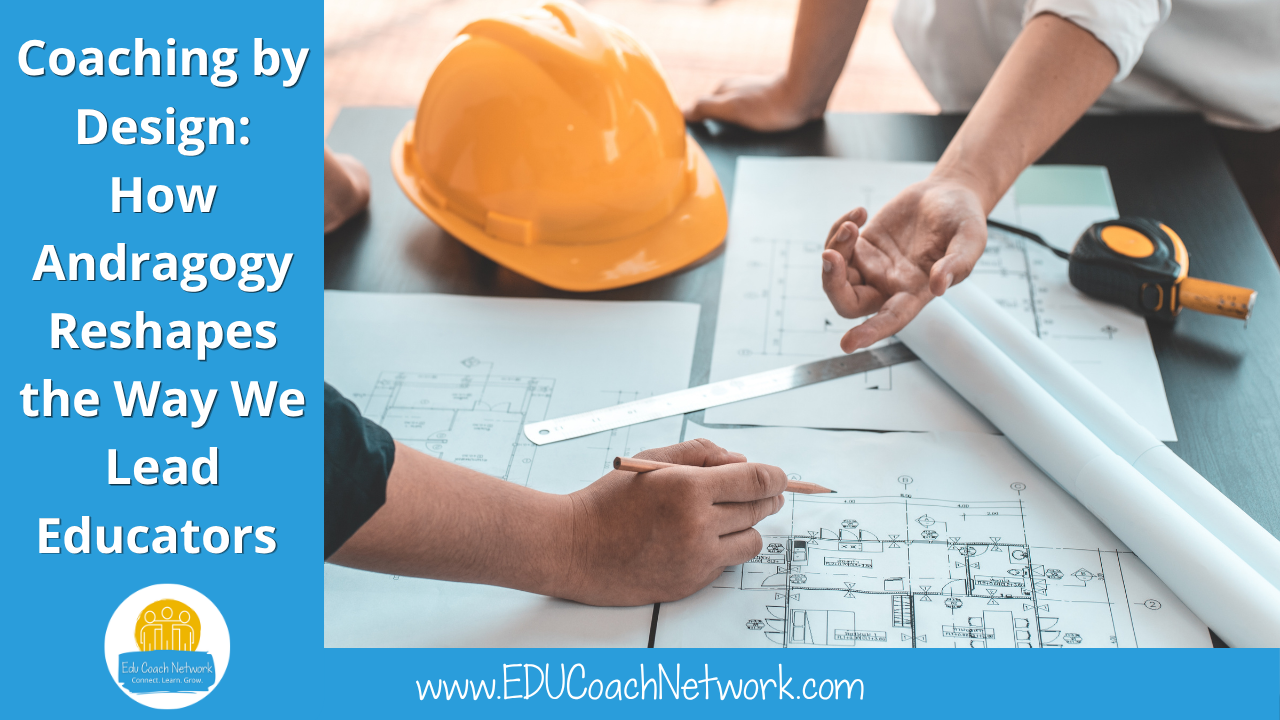
An architect doesn't tear down an existing house or move in with a pre-fabricated layout. They inspect the existing foundation, listen to what the homeowner actually needs, and co-design a blueprint that makes the structure stronger.
When you approach your teachers as an architect, the dynamic changes:
|
The Contractor Mindset (Pedagogy) |
The Architect Mindset (Andragogy) |
|
Delivering Answers: Handing over a pre-made rubric or strategy. |
Co-Designing Blueprints: Asking, "What do you want student success to look like in this unit, and how can we design a tool to capture it?" |
|
Ignoring the Foundation: Treating a new initiative like a complete rebuild. |
Honoring Existing Wisdom: Asking, "What routines are already working well in your room that we can anchor this new strategy onto?" |
|
Focusing on Compliance: Framing goals around district rubrics or walk-throughs. |
Focusing on Structural Integrity: Grounding goals in real-time student outcomes and reduced teacher stress. |
Making this mindset shift allows us to stop worrying about being the "expert with all the answers" and start focusing on creating the right environment for growth.
Building Processing Time Into the Blueprint
If we want teachers to leave our sessions feeling empowered rather than overwhelmed by a new to-do list, our blueprints must include intentional space for three things: digestion, collaboration, and immediate application.
Here is how you can architect those spaces across the three primary ways we work with educators:
1. In 1:1 Coaching Cycles: Designing "Joint Site Inspections"
Rather than observing a class and coming to the debrief with a list of things to fix, step into the reflection process together.
- Pause Before Responding: Give yourself—and the teacher—permission to digest what happened. Ask open-ended questions like, "What felt smooth during that transition, and where did you feel the energy shift?" Then, truly listen without immediately jumping in with a solution.
- Co-Plan the Next Layer: Never leave a 1:1 meeting with an assigned task for the teacher to complete alone later. Reserve the last 15 minutes of your coaching conversation to draft the lesson tweak, adapt the graphic organizer, or set up the data tracking sheet side-by-side.
2. In PLCs & Small Groups: Creating Collaborative Workspaces
Small group meetings easily turn into mini-lectures if a coach feels obligated to run the show. Instead, act as the facilitator who holds space for peer-to-peer reflection.
- Use Structured Protocols: Use simple, timed protocols for examining student work or lesson plans. This keeps the conversation focused on student evidence rather than personal opinion, and it ensures every voice in the room is heard.
- Leverage Collective Wisdom: When a teacher voices a challenge, resist the urge to answer first. Turn to the group and ask, "Has anyone else navigated a similar dynamic with their period 3 class? What did you try?"
3. In School-Wide PD: Protecting Workshop Space
To keep large sessions from becoming a "sit-and-get," anchor your design in the 20/80 Rule: spend 20% of your time introducing the concept, and reserve 80% for hands-on application.
- Build In "Site Work" Time: If you are sharing a new formative assessment strategy, do not end the session with a slide that says "Try this next week." End the session by giving teachers 30 minutes of uninterrupted, supported time to build that assessment directly into next Tuesday's lesson plan.
- Offer Differentiated Pathways: Honor where veteran and novice teachers are by providing options. Allow experienced teachers to adapt the framework for advanced projects, while offering guided templates for those who want more scaffolding.
Creating spaces where teachers feel respected, heard and genuinely supported doesn’t happen by accident – it takes intentional design. When we let go of the pressure to be the instruction at the front of the room and step into the role of the architect, we change what professional development feels like for our schools.
The next time you sit down to outline a 1:1 debrief, a PLC agenda, or full-staff PD, pause and ask yourself: Am I trying to build this for them, or am I creating space for us to build it together?
💾 Want more? 📚 Read
🔊 Listen to the Restart Recharge podcast
-
Episode 505: Exploring NotebookLM for Productivity and Collaboration
-
Episode 218: The Walking Coach - with Adam Juarez & Katherine Goyette
🎬 Watch (EDU Coach Network All-Access Members only)

